A Tender End
By LaDonna Witmer
“I can’t pronounce the guy’s name,” my Dad hollers down the phone line. “He’s a doctor up by Chicago somewheres, emergency room doctor. Anyhow, he’s got this business called Hala.”
Dad pauses, tries the name again: “Hawlah? Hayla? Somethin’ like that. Hala Farms. They only take sheep and goats.”
My 82-year-old father is calling from Illinois to explain his new business idea. It’s more than an idea, since he’s already cashed in most of his Social Security stash to buy a new buck goat. White, with nut-brown ears. Oscar Mayer, my Dad calls him. Because he’s a meat goat, get it? My bologna has a first name, it’s O-S-C-A-R.
Not that anyone is going to eat Oscar Mayer the meat goat anytime soon. He’s got too many babies to make. The babies are the ones who’ll get served up on dinner plates, most of them. That’s what they’re bred for, to grow fat off the land until the day the halal butcher slices their soft throats.
Because it’s not Hala Farms that my Dad is raising goats for. It’s halal. The Arabic word means permissible, lawful. The antonym of forbidden, haram.
::
Islamic dietary rules prescribe that on its way to becoming food, an animal must be happy. Raised with care, in a clean and humane domain. Fed a healthy diet free of artificial additives like hormones or antibiotics.
On the creature’s final day, it will be slaughtered by a Muslim who thanks it for its sacrifice and thanks Allah for his provision. The knife that severs the esophagus, carotid artery and both jugular veins will be sharp and swift. The animal will not suffer fear or pain. One moment, bleating and blinking. The next, blank and bleeding.
These new goats, the meat goats, are not the first my father has sold off to a speedy demise. But they are the first to be raised solely for that purpose, the first to be sent to a tender knife.
::
if only I could be so lucky
if only my mother
::
My father has never been precious about his treatment of livestock, castrating the male kid goats with a thick rubber band so their balls would shrivel to raisins and fall forgotten into the barnyard detritus, or burning the buds of kid horns down to nothing with a hot iron so the babies would grow to be horn-free, smooth-headed adults. Pleasing to the eye and easy to handle.
“Doesn’t it hurt them though, Daddy?!” cried little me as I watched smoke scream out the mouth of a five-day old baby goat.
“Nah,” he shook his head, the kid’s kicking body trapped between his knees. “She’s gonna be fine.”
::
There have always been goats in my father’s red barn. When I was a child, we named them after flowers: Tulip, Daffodil, Tiger Lily. It was an all-female herd of Nubians, signature long floppy ears brushing their cheeks like the bleached pigtails of Baby Spice.
The boy goats never made the cut. Didn’t get flower names or long lives. When they were old enough to live off the field instead of the udder, they were culled from the herd. My father would load them into the back of his blue GMC pickup truck. I didn’t ask where he was taking them, I already knew they would never come home. I’d kiss their soft, slit-nose snouts one by one, tears thickening my throat.
“Goodbye, Benjamin! Goodbye Pinenut! Be a good boy, okay? Be a good boy.” I’d stand at the graveled apron of the driveway and wave them down the road, “Have a nice liiiiiiiife!” I’d yell as the truck retreated down the hill, pretending they were off to clover-laden fields somewhere over yonder. Then I’d go to my room and have a secret cry.
Within a week, the ill-fated billies would be out of mind, lost to the summer bustle of 4-H Fair preparation. My sister and I had to choose the does and nannies most likely to bring home a trophy, then teach them how to walk docilely beside us like a well-trained dog. We had to ready our show whites, the all-white jeans and t-shirts we were required to wear in the show ring, green cloverleaf ribbons tied in our hair. We had to repaint the wooden feed chest with the name of our flock—Nubian Flowers—so all the fairgoers wandering through the goat barn would see it and know we weren’t dicking around.
::
Sometimes there would be a Nubian Flower amongst the bucks in the back of the truck. She’d have the misfortune of being born brown, and my dad didn’t keep the brown ones. He was going for an all-black herd. They could be spotted or speckled or not, so long as their coat was black.
My sister and I didn’t care either way, we loved the gangly kids all the same. But Dad had an aesthetic, and we bowed to it.
::
i’m making him sound like a monster
he wasn’t
::
Dad worked one town over in the hinge-making factory, leaving home in the morning dark long before the rest of us got up. He’d return just in time to pick us girls up from school, his polyester pants prickled with curlicues of steel and grease staining the whorls of his fingers.
He never missed a milking session though—his routine was religion. Pulling the metal scoop from the nail on the wall of the milking stall, the satisfying shush as it slid deep into the bucket of grain, then the scatter of kernels in the feedbox. The eager maaaa!, the clatter of four split hooves as the nanny took her turn in the wooden stanchion, jamming her muzzle into the feed while my father squatted on his stool, leaned his bearded cheek against the warm barrel of her belly and pulled milk from the swollen udder, shooting it into the narrow neck of a glass milk jug with a skillful twist of his broad fingers. The barn cats, darting from shadows to lap the sweet froth from the floor where it spattered. Twice a day he’d do the milking, once in the small hours before he left for work, the goats still sleepy in their stalls, and once again when he got home, calling the herd in from the pasture with a rattling bucket of oats and a loud: “Here, goater, goater, goaters! Here, goats!”
::
The elderly rust-flecked Frigidaire on our back porch was the milk fridge, full of glass bottles that gathered a skim of cream in the neck. We’d scoop it off with a spoon before pouring it on our store-brand Honey Nut Os, slopping the milky skin into a pan for the Beagle.
Back then, all our goats were dairy goats. Milk was the reason for their existence. Long-haired women who met my mom on Tuesdays at the grocery co-op between free-falling piles of kidney beans and bulk bags of carob chips would drive out to our place in wood-sided station wagons, count out their quarters for a chilled bottle to feed their pale children. I, summer-bronze and barefoot, would stand at the well house and stare into the air-conditioned interiors of those wagons, wondering at the lives of soft city children who flinched at spiders and squealed at shit. I was not jealous but smug, running flat-heeled across the sharp rocks of the driveway to fling a leg over the bars of my bicycle, the one I named Crankyshanks because my father brought it home from the town trash heap, rattletrap but functional. Its two tired footrests had been reduced to a thin metal bar, no wide plastic pedals made for the grip and push of shoe-clad feet. I’d curl my naked toes around its sun-hot foot bars, clatter circles around those spotless station wagons to assert my dominance in a way I never did at school where teachers failed to appreciate the virtue of unshod feet or my prowess at belching the entire alphabet.
::
If the goats were my father’s idea, making money off their milk was my mother’s. A registered nurse who commandeered pediatric wards until she birthed her own two children and took her place as a stay-at-home wife, my mother couldn’t stand idle time. While my father worked hot days in the factory down by the river, my mother kept herself and our small acreage bustling and solvent, stretching that single paycheck to cover electric bills and tractor fuel and 50-pound bags of goat feed. Selling milk and honey and beeswax candles by word-of-mouth. Refusing my sister and I those McDonald’s Happy Meals with the toys inside because she could make us better (cheaper) burgers at home.
::
Goat herds are matriarchal.
Despite their belligerent bellowing and overpowering stench, it is not the bucks with their low-swinging nut sacks who lead the flock. The dominant doe leads the rest of the goats to food and water, frightens off predators with her fearsome snorts and hoof stomps, with unflinching eye-contact and walloping head butts.
Sunday mornings when my mother snapped her fingers at her unruly daughters, pinned us in place with that blistering glare, every single slouching body in the entire Faith Baptist sanctuary sat up straight as Jesus.
::
Technically, my father was the head of the household. Our brand of Christianity dictated that leadership roles were entrusted only to men: Preachers, Presidents, Patriarchs. “Wives, submit,” said the Scriptures, “for the husband is the head of the wife, even as Christ is head of the church.”
Technically, my mother submitted.
“We’ll have to wait until your father gets home from work and ask him about that,” my mom would say if my sister and I asked if we could keep the barn cat’s babies instead of putting the Free Kittens sign out by the road.
“I’ll have to see what my husband says,” she’d respond when her favorite niece asked her to come to Indiana for the weekend.
She didn’t argue when he said he wanted to try raising a whole new flock of sheep alongside the goats, didn’t question his judgment when he towed yet another orange tractor home from the farm sale, this time minus an engine. “I’m gonna get this up and running afore August,” he’d declare, and she’d just go, “Mmm-hmm” even though she knew it’d be up on blocks for at least a year.
::
More than anything, my father wanted to be a farmer. Filled our one-point-five acres with more critters than the barn could hold. Built another barn to handle the overflow.
And my mother? She made the garden grow and the chickens lay. Canned the green beans and froze the sweet corn. Shoveled snow and shit and served up pork chops and baked potatoes on bright orange Fiestaware whenever stomachs rumbled. The show was Dad’s but the scaffolding upon which it hung was built and sustained by my mother. She made all his homespun dreams come true.
::
what dreams were my mother’s?
i never heard her give them voice
::
The farm in Illinois has a different address now. After my sister and I left our parents empty nesters, they upgraded from hobby farm to genuine. Nine acres alongside Skunk Creek, a two-story dairy barn and slat-sided corn crib with silver silo.
The goat herd moved with them, smaller than it used to be. Every spring though, there were new additions.
“Yeah, I didn’t get much sleep last night,” Dad would report when I called from California. “Two of the nannies went into labor and we got five new babies this morning. Only one of them is black though. All the rest are brown. I don’t know what I’m doin’ wrong. Seems like we had a lot more black ones when you girls were younger.”
I could almost feel my mother roll her eyes. But she’d still be holding up the whole operation, bottle-feeding flop-eared kids while my father was at work.
::
When she broke her hip, she was carrying two heavy buckets across the cement floor of the big red barn and slipped on a slick of spilled water. By the time my plane arrived, the day before she got out of rehab, my father had no clean underwear left and nothing to eat but ketchup sandwiches.
“Are you telling me you don’t know how to run the washing machine?” I asked when he confessed he was commando beneath his denim overalls.
He laughed, shook his head, “Naw! Yer mom does all that stuff!”
Later, when it was just my mother and I lunching at Arthur’s Garden Deli, her new wheeled walker parked beside our table, we talked of goats.
“You know you guys have to downsize, right?” I begged. “You’re in your 70s now, you can’t keep getting up at three in the morning to be a goat midwife!”
“I know, I know,” she poked at the chive-covered mound of her microwaved potato, “but you know your father. He loves having those goats around.”
::
Something like 75% of people in the world eat goat meat. I have only eaten goat once, by accident.
We had a goat named Tinkerbell when I was five, and I remember her as all-white, which means she was likely not a Nubian Flower. Possibly Dad hadn’t narrowed his herd down to Nubians at that point. Certainly he hadn’t yet hit upon the scheme to name them all after flowers.
I had been given numerous and vehement instructions to stay away from this goat. Never to go into the barn without an adult, never to climb through the child-wide spaces in the big metal gate that marked the line between people territory and animal. Tinkerbell wasn’t a friendly creature. Prone to head butting, she had been known to flatten a grown ass man. So when I disregarded all admonitions and slipped my small self through the gate, I stood no chance of remaining upright.
Although I can remember Tinkerbell standing moon-bright against the rest of the goat bodies in the dim refuge of the barn, I retain no memory of the day she smashed me like a whim into the shit and straw. Did I stretch out my hand, palm up, in the universal offer of animal friendship? Did I wander from house to barn in my nightgown, sleepwalking as I was inclined to do? Were my eyes even open when her curved horns crashed into my ribcage? Is she the reason my father dehorned every goat who came after?
I don’t know what sound I made when I went airborne, but it was my grandfather—out smoking a Winston behind the barn—who heard me and came running.
In the stories worn thin with telling at family reunions, the goat chops were served up on the table that very same night. Likely it was a few days before Tinkerbell made her way to my dinner plate, but I was chewing away happily until my cousin across the table couldn’t keep his laughter from leaking.
“What’s so funny?” I demanded, cheeks round with meat.
“I guess you don’t have to worry about that goat bashing you no more!” he cackled while my mother fixed him with a glare that would melt Tupperware.
“Daniel,” she warned. She snapped her fingers, reached across the food to snatch at his skinny arm.
He danced out of his chair to safety, still laughing and pointing at the steak-red slice on my plate.
“It’s Tinkerbell!” he crowed. “You’re eating her!!!”
::
When my father finishes telling me about all his new meat goats, the Boers and Kinkos now crowding out the Nubians in his big red barn, I ask what my mother thinks of the new venture.
“Well,” his voice changes, drops a pitch. I can hear him take off his baseball cap, rub a calloused palm through the thinning strands of his hair the way he does when he’s anxious. “She don’t know that they’re for eating, of course. I hafta watch her when she comes to the barn. She gets mad at the goats for bellerin’ and tries to conk them on the head with her cane.”
He laughs, though neither of us think it’s funny.
“I do my best to keep her outta the barn you know, but it’s hard. Nobody ever could stop yer mother when she set her mind to somethin’.”
::
my mother’s mind is not what it used to be
there is no happy ending here
::
When a herd loses its matriarch, everything falls into disarray. The remaining goats are confused, lost. The field fills with their cries. They fight amongst each other. The previous order of things is gone. There is no one to tell them what to do.
No matter what my sister and I say these days, no matter what evidence we present, no matter what logic, my father refuses to let a home care nurse enter the farmhouse, insists there is no way he can allow my mother to be admitted to a nursing home, not even the really nice one by the Kroger, with a Memory Care unit in which a room costs $9,000 a month. Not that any of us could swing that kind of fee.
“I made a vow,” he says, spreading both hands wide and helpless on his lap. “In sickness and in health. I’m not gonna back down on that promise.”
He scrubs his scalp with the palm of his hand, makes all his gray hairs stand on end: “We ain’t even got to the hard part yet.”
Half the time my mother thinks my father is her father. The other half she remembers he belongs to her but forgets his name. “The Man,” she calls him. Like: “I’m waiting for The Man to get home.”
My sister and I disappeared from her brain when the neurons that contained all our data died off. It’s been two years since she forgot my name and when I see her, I call her by her own. It seems rude to say “Mom” to a woman who considers you a stranger.
::
there is no word for what my father is
now that my mother cannot hold him up
::
The goats are a comfort. A distraction. An escape for an old man with no tender end in sight.
It’s all downhill from here. It gets worse and worse and worse until my mother forgets how to swallow.
So my father goes to the barn, where the goats know his voice. Where he can slide his metal scoop into grain buckets, scatter sweet hay in the mangers. Raise up a hearty generation who will be celebrated on feast day, slow roasted and slathered in spices.
“Kol ‘am wa entou bekhair,” the people will say, I wish you goodness every year.
In previous lives, LaDonna Witmer (she/her) was a newspaper journalist, advertising copywriter, brand voice expert, editorial director, public speaker, and poetry slammer. She now tends her dogs, dahlias, and daughter on a small quinta in rural Portugal while writing essays, poems, and memoir. LaDonna has work published in KHÔRA, Literary Mama, Zero Readers, Take the Fruit: An Anthology of Religious Trauma, and other journals. She is writing a memoir about Christian fundamentalism and fire.
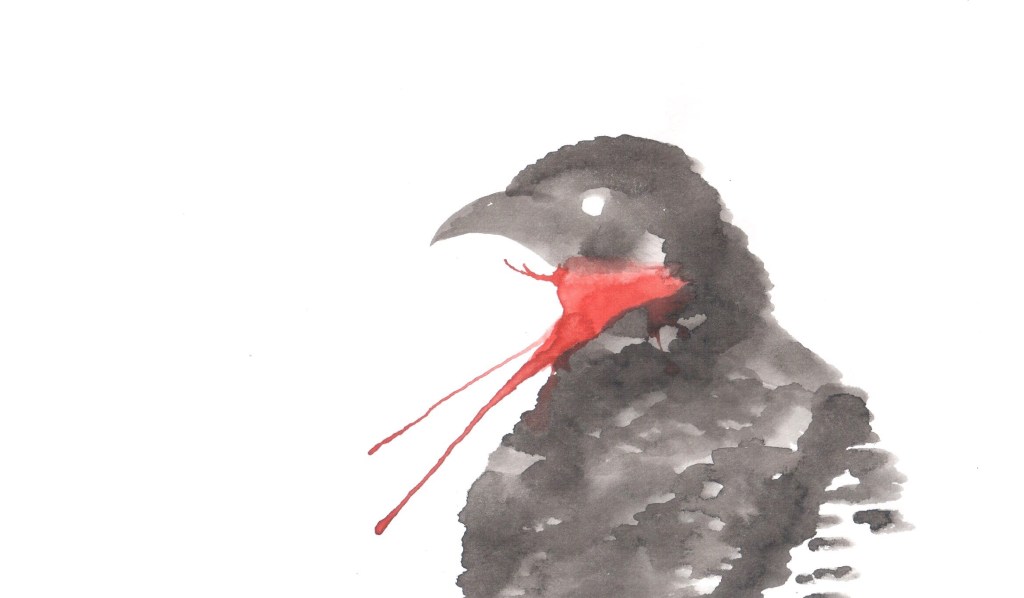
Artwork Source: Untitled by Kate Efimochkina.
Kate Efimochkina is a writer and artist. You can see her work in Stone Circle Review, Lamp Lit, The Turning Leaf Journal, among others. She is the founder and editor of Odd Lobster.
 turningleafjournal.com