Take Your Writing to the Next Level: Let Poetry Prompts Inspire You!
by Jacob Butlett
Teaching creative writing to undergraduates taught me, with no surprise, that most students believe the myths and misconceptions about poetry. (There are too many to list here. But the lie that poems must rhyme and must be cryptic is particularly irksome.) As I gave a plethora of lectures on poetry writing, especially those on the technical side of writing, I noticed the challenges my students faced in learning how to write meaningful poems. In response, I began to put more emphasis on this: the inspirational power of poetry prompts.
Writing a poem without having any serious experience writing one can be daunting. I asked my university students to illustrate the stories of their lives one word at a time. To help them, I assigned this three-step poetry writing prompt:
- Step #1. List and describe six moments from your childhood or early adulthood in which you strove to achieve, accomplish, or overcome something of great personal significance. Think of specific memories that could be retold as stories. What got in your way in reaching your goals? Where were you when these events happened?
- Step #2. Describe each moment/memory in 4 or more sentences (six mini paragraphs total, one for each moment). Feel free to label each moment with a heading. Do NOT analyze your notes yet.
- Step #3. Out of those six moments, select three that stand out the most. Now answer these questions: Why do your chosen memories stand out? Are the memories funny? Depressing? What makes them particularly personal and noteworthy? Be vulnerable. These three moments/memories could be expanded into poems.
Poetry prompts like this can be a godsend. My students spent less time staring at blank pages and falling for the lie that they must follow certain “rules” of poetry, and more time writing.
I love poetry because I love storytelling and the inventive ways writers can describe and meditate on topics or moments close to their hearts. But I’ve struggled to write poetry, too. By following a prompt that resonates with me, I can compose my thoughts within a framework without the stress of having to come up with one on my own. A great poetry prompt isn’t great because a great poem may or may not come from it, but rather because it inspires a writer to keep on writing. How can any writer be expected to learn if one doesn’t write again and again and again?
Why is this important? Well, imagine a smoky bar at dusk. People drink beer and play darts while jazz performers play in tawny beams of spotlight. And there you sit at a small table in the middle of the room, alone, enjoying the ambience. Then someone you may or may not know takes a seat across from you and whispers, I have something I need to tell you. So, you lean in, eager to listen. A great poem is that person, drawing you in with their words, alive with exigency, with concern, with, perhaps, wonder.
Some writers think writing poems based on prompts is cheating. Readers will know I’m using prompts, these writers complain. Thankfully, only worried writers care whether a poem (or any other piece of art) was inspired by a prompt.
Advanced writers can benefit from prompts. In fact, many poems in Languish, my forthcoming book, were inspired by prompts. Languish explores my history of mental health issues, namely depression. Prompts, especially eclectic ones, helped me to channel my past into poems. Anyone who wants to take their writing to the next level should read The Crafty Poet, a wonderful book of writing tips and prompts. Languish would likely not exist if not, in part, for The Crafty Poet.
I treat every poem I write as a form of play and practice. For myself, and my students, I keep learning by developing and finding prompts that encourage me, directly or indirectly, to worry less and create more. Now I want others to develop and find prompts that speak to them.
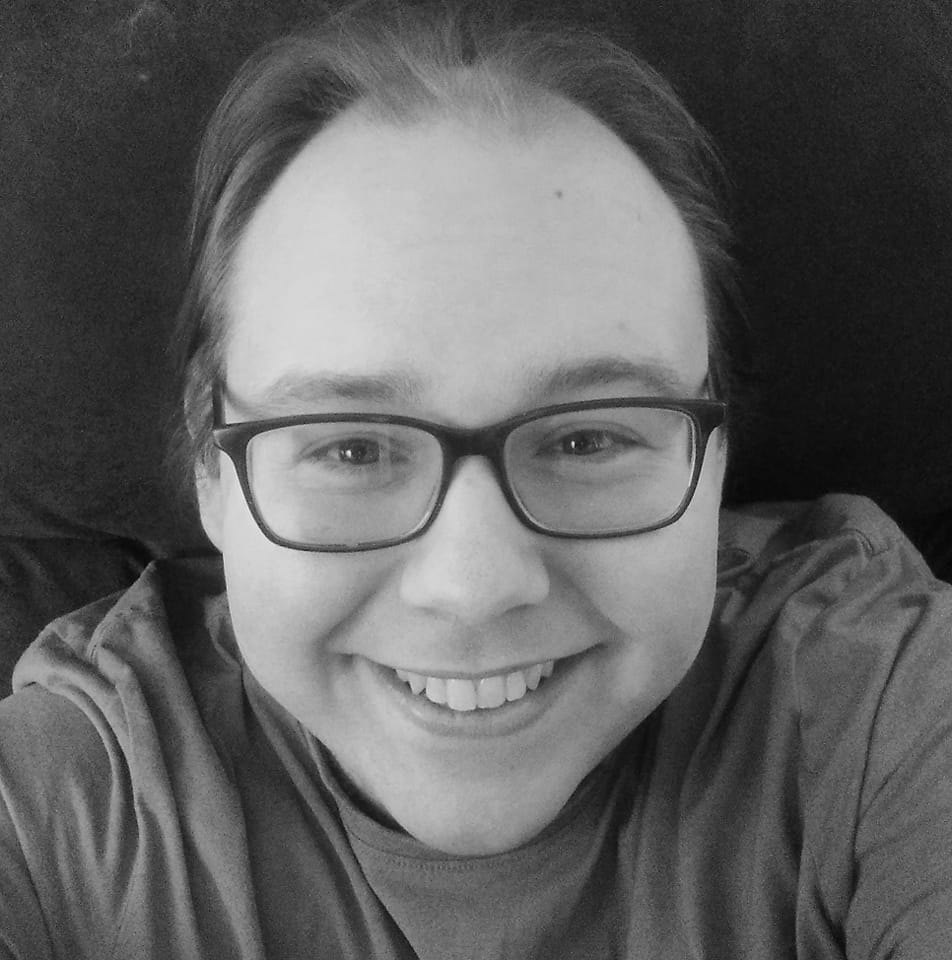
Jacob Butlett is a Pushcart Prize- and Best of the Net-nominated author with an MFA in Creative Writing. He works as the Head Poetry Editor at the Blue Earth Review. His creative works have been published in many journals, including the Colorado Review, The Hollins Critic, The MacGuffin, Lunch Ticket, and Into the Void. He received an Honorable Mention for the Academy of American Poets Prize (Graduate Prize) at Southern Illinois University at Carbondale (SIUC), sponsored by the Academy of American Poets. He also completed the course on writing best-selling fiction offered by The Great Courses. He is the author of a book of poems titled Stars Burning Night’s Quiet Rhapsody (Kelsay Books, 2024).
More from Spring 2026
 turningleafjournal.com
You must be logged in to post a comment.