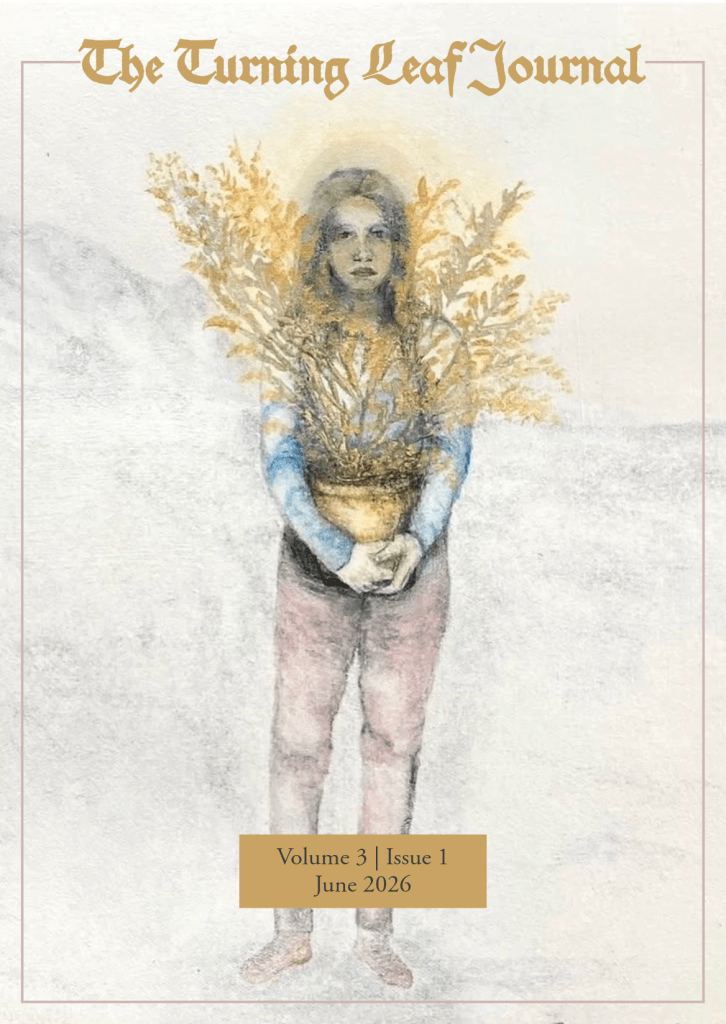
Issue Cover Artwork by Anita Eralie Schley
Letter From the Editor
Dear Readers,
Two summers ago, I moved to Minnesota, a move that meant leaving behind the places and the people I’d spent most of my life with. It was a new start, and one I was eager for, but, of course, it wasn’t without some apprehension. The day I arrived, I realized there’s nothing quite like a Minnesotan neighbor. For someone you may only see in passing they are fearsome in a time of crisis. This past winter, we got to show the world how strong our community is as we rallied together in protest of Operation Metro Surge. We witnessed the murders of Renee Nicole Good and Alex Pretti in our streets. We made it impossible to ignore–becuase it is not the kind of thing that can be ignored.
Click here to continue reading
Time moves forward. There are less ICE agents on our streets, though they are still here. The news has gotten quieter. When it feels as though the dust has settled, I think of the day my students came back to campus, afraid, following the first murder. Most of them were no stranger to this kind of brutality, having already witnessed the murder of George Floyd six years previous. When they confided their fear, I asked them what came after it. What follows fear? What follows grief? I suggested to them that action is what comes next. Action, in whatever capacity they feel they can manage. For some, it meant being one of the tens of thousands marching through downtown Minneapolis in frigid winter conditions. For others, it meant reading. Educating themselves. Trying to understand what it means to be a person in a country that no longer welcomes them. Maybe the best action we can take is to write down what we observe. We were taught, during trainings to become Constitutional Observers, that because we can not physically fight back during an attack, our words become our fight. We must tell our stories. And we must tell them loudly. Otherwise, how can we make sense of what we’ve seen? How will we know what we’ve learned?
As we prepared to open for submissions, we knew you’d send work that responds to issues of ICE brutality and stories of immigration–and we asked you to. Equally important, during conversations like these, are reminders to take breaths. When we asked for responses to current events, we also asked for seeds of hope. You filled our inbox with them and reminded us of hope’s abundance. In Volume 3, Issue 1, we see how history moves in circles, how no grief is ordinary, and how to find the root of what’s most important to us.
As for me, these past few months have brought me closer to community than ever before. I discovered it in rooms with strangers while we learned, together, how to protect our family, our friends, and our neighbors. I discovered community in group chats that never stayed silent, and in my driveway while ICE circled around my home looking for people they would never find. I still discover community when I see whistles hanging from jacket zippers and keychains. When I see how, six months later, we’re still making noise. And I see it in you, dear readers, when you tell me your stories.
I hope you find community within this issue–it’s here, waiting for you.
Wishing you safety and time with your loved ones.
Megan Eralie-Henriques
Founder, Editor-in-Chief
 turningleafjournal.com
You must be logged in to post a comment.